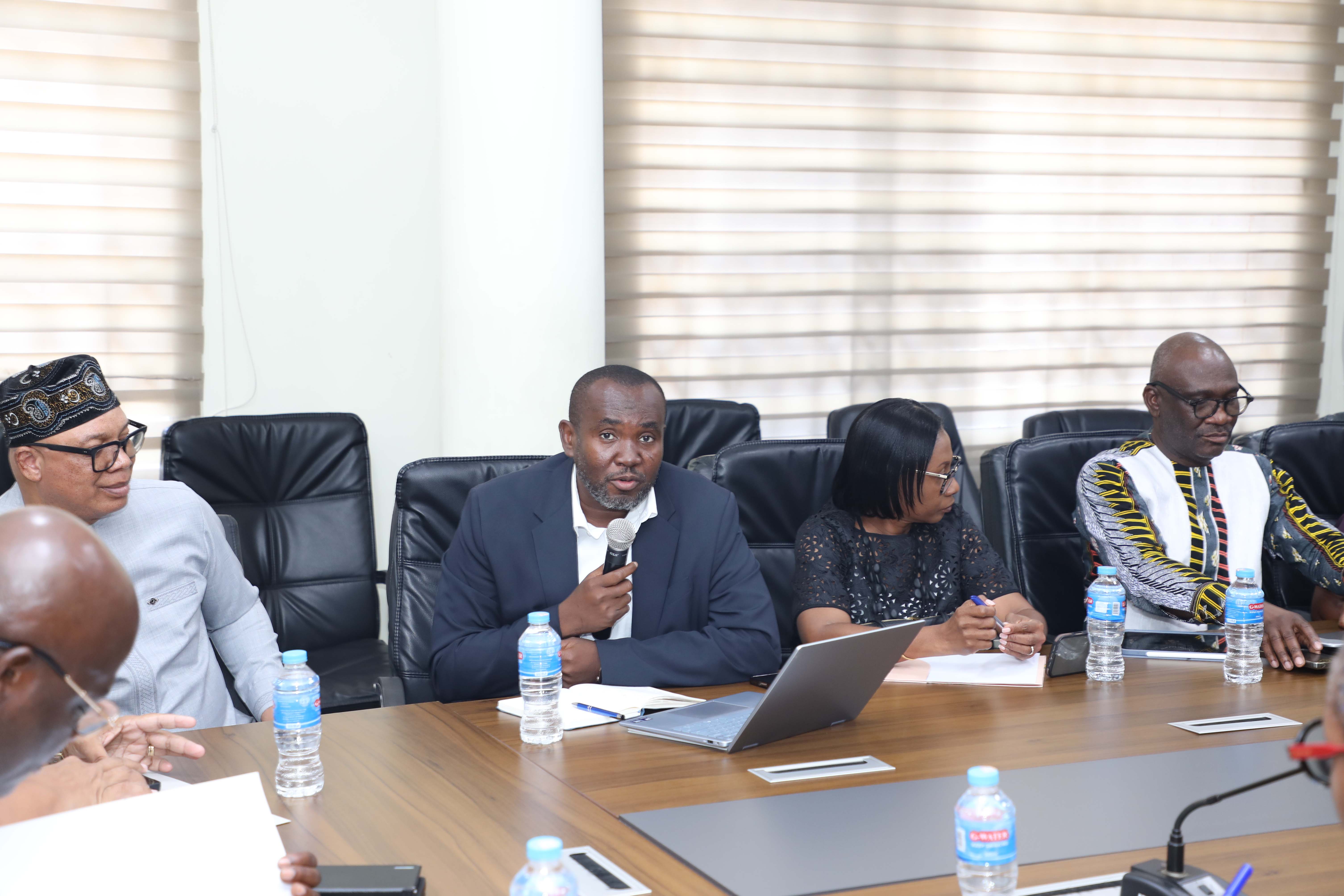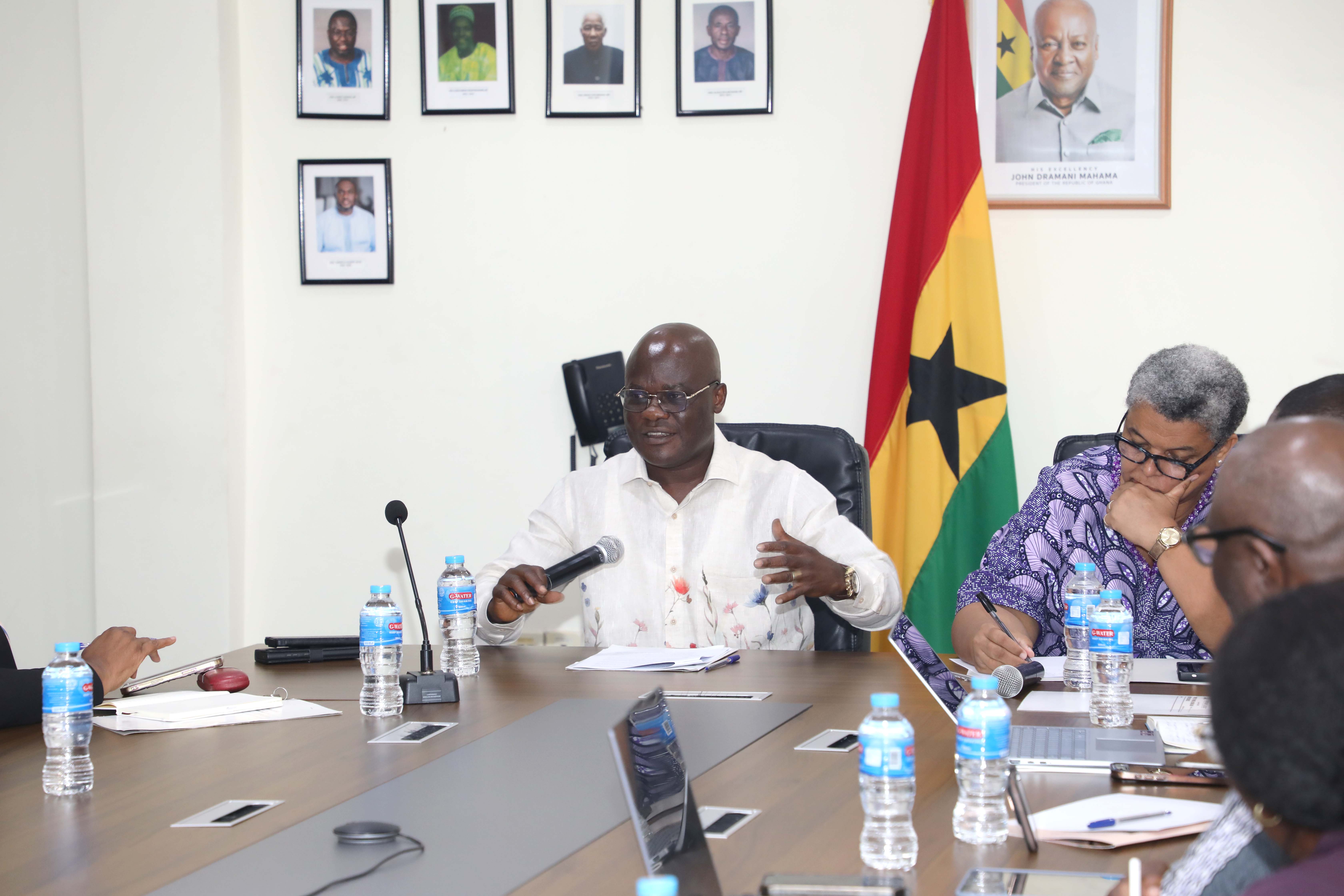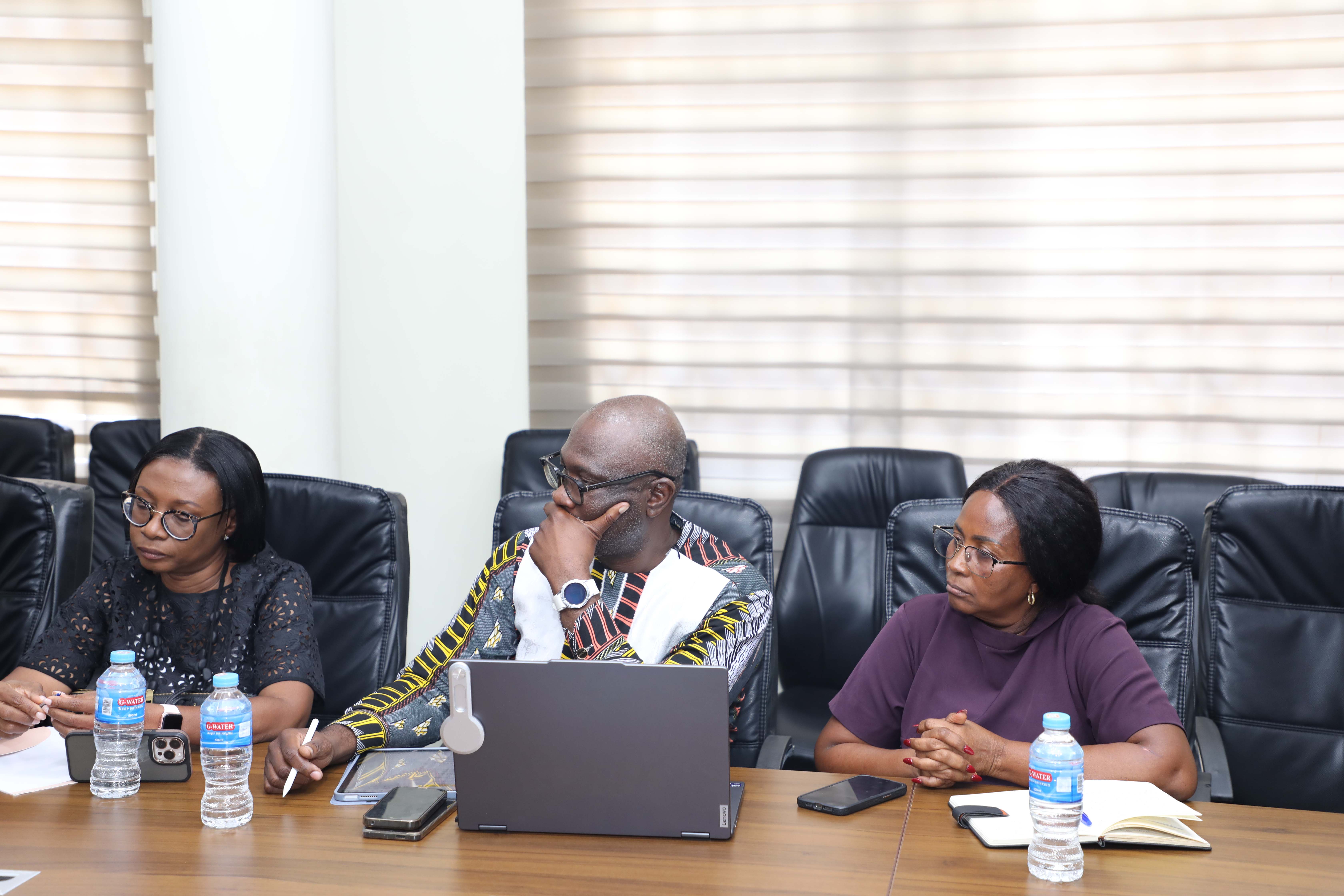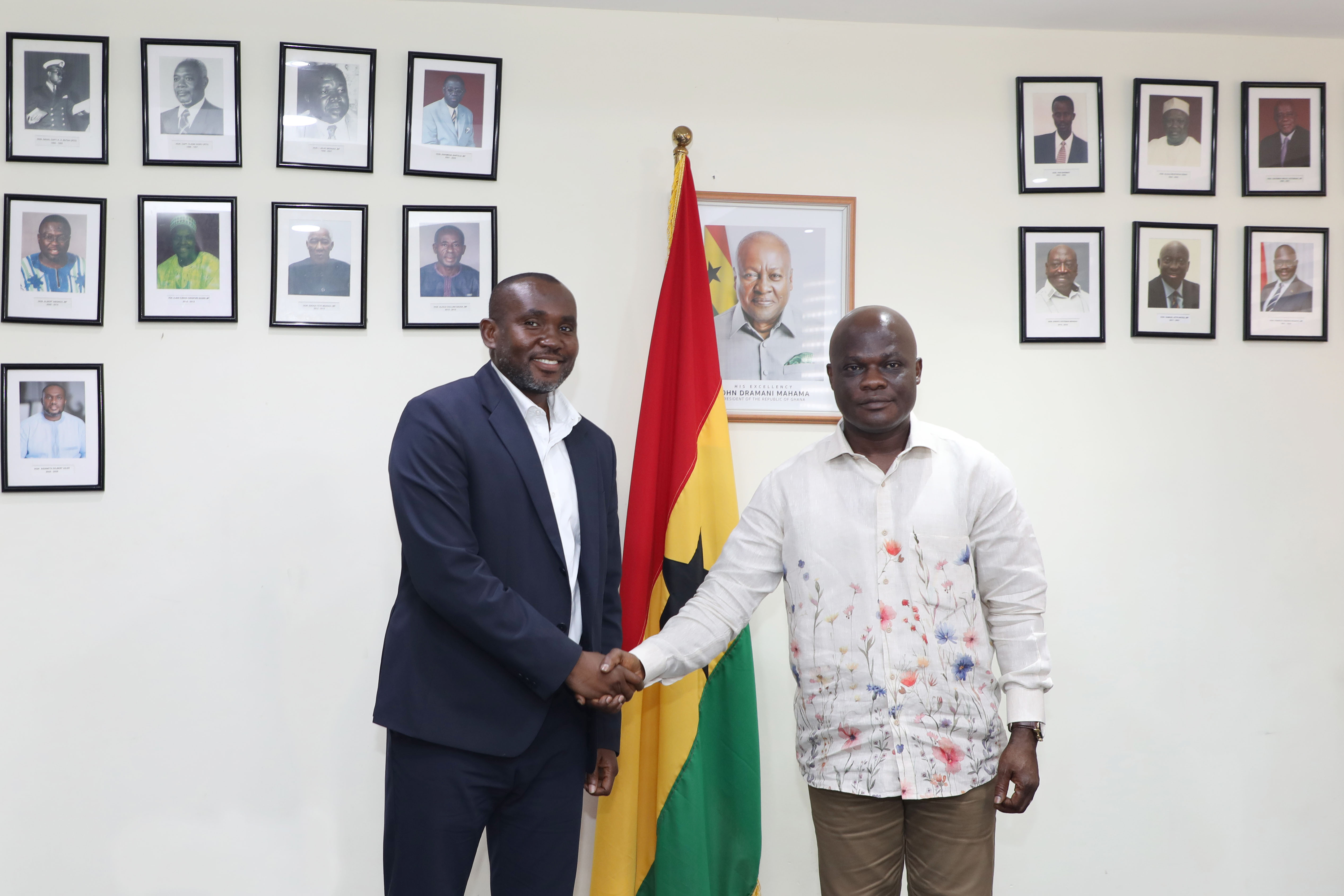

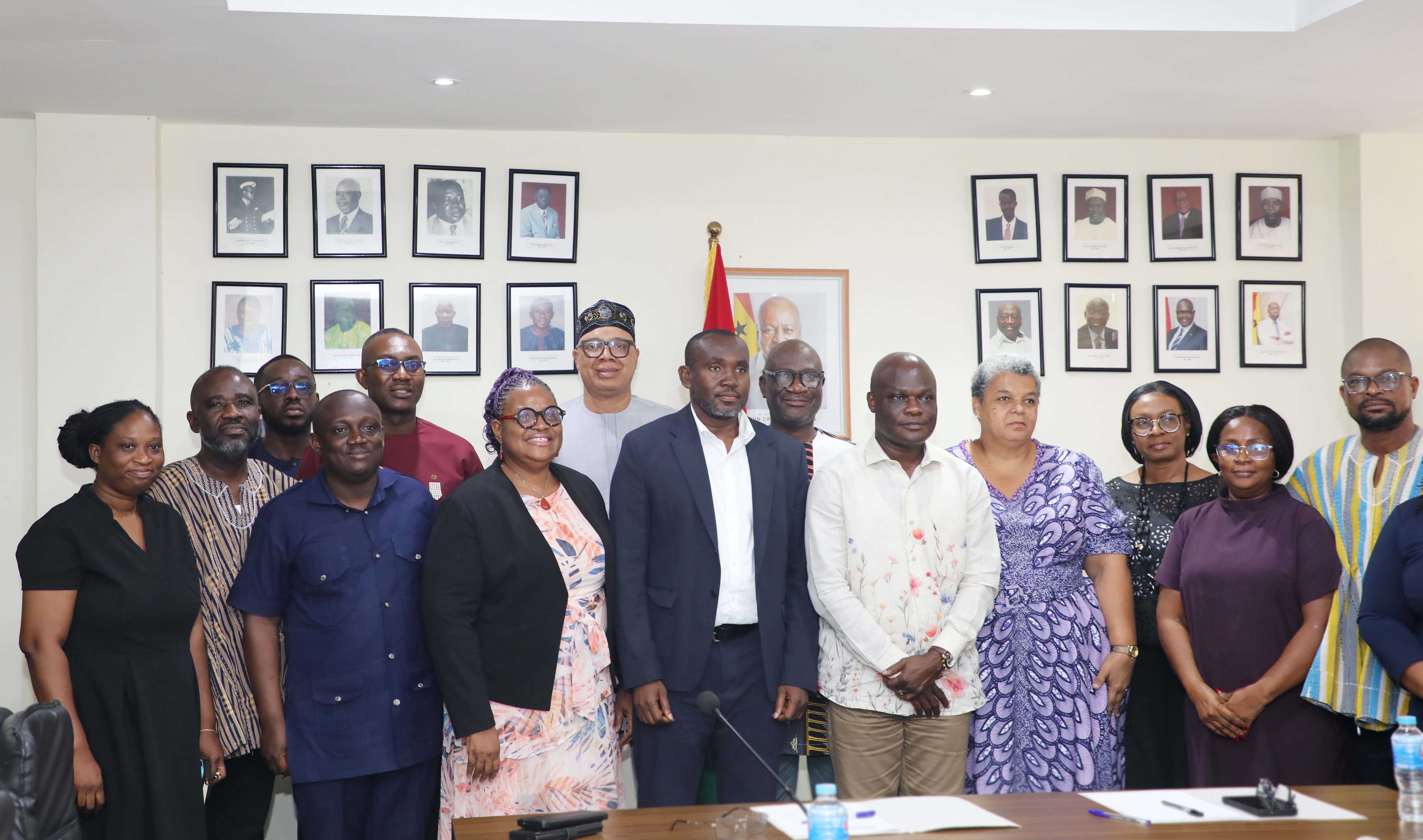
The Executive Secretary of the Public Utilities Regulatory Commission (PURC), Dr. Shafic Suleman, has paid a courtesy visit to the Minister for Works, Housing and Water Resources, Hon. Ahmed Ibrahim, to welcome him to the Ministry and strengthen collaboration towards improving water service delivery in Ghana.
The engagement held on September 30,2026, provided an opportunity for Dr. Suleman to brief the Minister on key initiatives being pursued by PURC in collaboration with the Ministry to strengthen the regulatory and financial framework of the water sector and promote the delivery of safe, reliable and sustainable water services.
Among the major initiatives discussed was the development of a Cash Waterfall Mechanism for the water industry to improve transparency and predictability in the flow of funds and enhance the financial sustainability of water service providers. The meeting also considered the development of legislative and regulatory instruments, including a licensing framework for water tanker services, to promote accountability, sanitation and appropriate water-quality standards.
Water as a Human Right and Economic Enabler
Hon. Ahmed Ibrahim emphasised that water is not only a basic human right but also an essential resource for economic development, public health and climate resilience. He called for urgent regulatory and operational reforms to ensure that consumers receive reliable, safe and sustainable water services.
The Minister commended PURC for its recent tariff decisions, particularly the 0.85 per cent water tariff adjustment for the third quarter of 2026 and the decision to maintain water and electricity tariffs for the fourth quarter, effective October 1, 2026. He stressed that tariff decisions must balance consumer protection, especially for vulnerable and lifeline consumers, with the need to ensure that utilities have adequate resources to operate, maintain and expand infrastructure.
Strengthening Regulation, Efficiency and Consumer Protection
The discussions highlighted the importance of closer collaboration between PURC and the Ministry while maintaining clearly defined institutional responsibilities. The Minister explained that the Ministry provides policy oversight and supports public investment, while PURC regulates utility services, reviews tariffs, enforces performance standards and advises Government on utility regulation.
He proposed a standing technical working arrangement between the two institutions to coordinate reforms, develop joint initiatives and ensure consistent public communication on tariffs, water supply challenges, rationing and other major sector developments.
A significant issue was non-revenue water (NRW), which continues to affect the financial sustainability of water service providers. The Minister referenced PURC’s 2026 assessment, which put NRW at approximately 49.2 per cent against a benchmark of 43 per cent, with only three of the 13 regions meeting the benchmark. Although some improvement towards the mid-40 per cent range had been recorded, he stressed the need for further action.
He noted that water losses arise not only from leaking pipelines but also from inadequate metering, illegal connections, inaccurate billing and weaknesses in customer databases. He therefore called for NRW reduction to be incorporated into tariff methodology as a binding efficiency and performance objective, supported by stronger monitoring to link utility revenues and regulatory allowances to measurable improvements in efficiency and service delivery.
The meeting also examined the need to clarify responsibilities among key institutions, including PURC, Ghana Water Limited, the Community Water and Sanitation Agency, the Water Resources Commission and local government authorities. The Ministry’s Directorate of Water had previously been tasked to work with PURC on strengthening the regulatory regime and registering water service providers as a foundation for a future comprehensive Water Services Act.
Particular attention was given to the proposed Legislative Instrument (LI) for regulating water tanker services. The framework is expected to establish licensing requirements, minimum service and quality standards, and enforcement mechanisms to protect consumers and improve accountability. The discussions further emphasised extending regulatory oversight beyond urban piped-water systems to cover rural and small-town systems, private bulk suppliers, community-managed facilities, tanker operators and other water service providers.
The Minister also called for measurable and enforceable service standards covering supply hours, network pressure where feasible, advance notification of interruptions, restoration timelines and complaint resolution. A stronger complaints-management framework with clearly defined resolution timelines, he noted, would improve consumer confidence and make service providers more accountable.
Transparency, Climate Resilience and Sustainable Investment
Reliable data and public accountability were identified as essential to effective water-sector regulation. The Minister proposed a quarterly public water-service dashboard covering water production, bulk water volumes, collection ratios, continuity of supply, water quality, regulatory compliance and consumer complaints. The proposed dashboard would help consumers and stakeholders better understand sector performance and support evidence-based regulatory decisions.
Both parties also recognised the need for a joint public register of water service providers, covering Ghana Water Limited, community-managed systems, private operators, tanker services and bulk suppliers, to strengthen transparency and regulatory oversight.
The meeting further highlighted the growing risks posed by climate change, pollution, illegal encroachment and constraints on raw-water sources. The Minister called for tariff and investment proposals to account for source-water risks and climate resilience, identifying leakage reduction, treatment infrastructure, energy efficiency and the protection of water intakes as critical to the long-term sustainability of water services.
Recognising that government resources alone may not be sufficient to finance the expansion and modernisation required across the sector, the discussions also considered targeted public-private partnerships and development-partner financing, supported by clear regulatory rules and predictable tariff decisions.
The engagement reaffirmed PURC and the Ministry’s commitment to addressing longstanding water-sector challenges through stronger institutional collaboration, sustainable financing, effective regulation and greater accountability.
Ultimately, these efforts are intended to improve service efficiency, protect consumers, strengthen public confidence and support the delivery of safe, reliable and sustainable water services to communities across Ghana.