

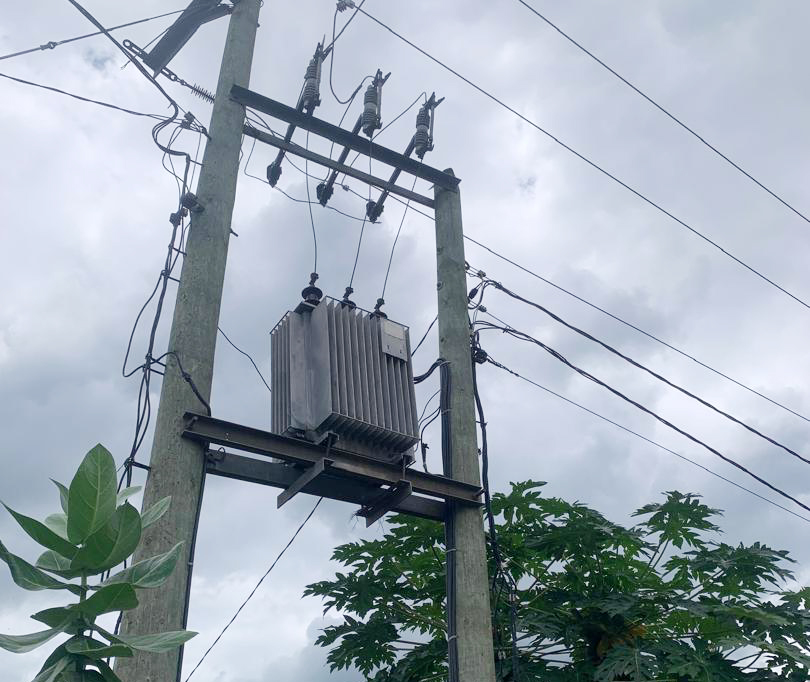
The Public Utilities Regulatory Commission (PURC), through its Central Regional Office, has facilitated the replacement of ten (10) damaged and overloaded electricity distribution transformers in communities across the Central Region. This follows persistent complaints received by the Commission with respect to prolonged power outages experienced by consumers.
For many residents and businesses in the affected communities, the power interruptions were more than just an inconvenience. In some areas, electricity supply had been interrupted for weeks, while in others, consumers endured outages lasting nearly two months. Households struggled to carry out their daily activities, while businesses that depended on electricity for their operations faced disruptions and financial difficulties.
Responding to the concerns of consumers, the PURC Central Regional Office engaged the Electricity Company of Ghana (ECG) to urgently address the challenges associated with the damaged and overloaded transformers and to restore reliable electricity supply to affected consumers. The interventions formed part of the Commission’s mandate to protect the interests of utility consumers and to promote efficient, reliable and sustainable utility service delivery.
Through its monitoring activities and engagements with consumers, the Commission identified ten transformer-related challenges affecting approximately 61,004 electricity customers across the Central Region.
The affected communities included Ajumako-Bisease, Katakyiase, Saltpond-Kurankyekrom, Cape Coast-Social Welfare, Nyankumasi Ahenkro, Saltpond Town, Agona, Anomabo, Ekumfi Edukuma and Gomoamaim.
The estimated cost of replacing the affected transformers was approximately GH¢550,000.
Among the communities that experienced significant interruptions was Ajumako-Bisease, where about 5,835 customers were affected by an outage lasting approximately one month.
In Saltpond Township, approximately 8,000 customers experienced an interruption of about one month and two weeks, while an estimated 7,500 affected customers in Anomabo experienced outages lasting between three weeks and one month. Approximately 4,000 customers in Gomoamaim reportedly endured an electricity interruption lasting almost two months.
Other communities, including Katakyiase, Cape Coast-Social Welfare, Nyankumasi Ahenkro, Saltpond-Kurankyekrom and Agona, also experienced prolonged interruptions ranging from approximately two weeks to more than one month.
The impact of the outages on consumers was felt in very practical ways, such that families had difficulty carrying out routine household activities which depend on electricity, while small businesses and commercial establishments faced challenges keeping their operations running.
Businesses such as drinking spots, cold stores, barbershops, hairdressing salons, restaurants, provision shops and other electricity-dependent enterprises, prolonged outages meant loss of working hours and customers, products gone bad in freezers, additional operating costs and reduced income.
The situation also raised concerns among residents about the reliability of electricity supply and the time required to address faults affecting critical distribution infrastructure.
It was against this backdrop that the PURC intensified its engagement with ECG to ensure that the identified transformer challenges received the necessary attention
The intervention followed monitoring of electricity supply challenges and engagements with consumers in the affected communities.
The Commission used information from consumer complaints and field-level monitoring to identify communities where transformer-related challenges were contributing to prolonged power interruptions. PURC subsequently called on ECG to prioritise the affected areas and undertake the necessary technical interventions to restore electricity supply.
The replacement of the transformers is expected to improve the reliability of electricity supply and provide relief to thousands of consumers whose daily lives and economic activities have been affected by the outages. The intervention is particularly significant for communities where electricity is central to local economic activities.
The Commission addressing such challenges also reinforced the importance of consumer complaints and feedback in identifying weaknesses in service delivery.
The Commission’s intervention in the Central Region demonstrated the value of consumer feedback, regulatory monitoring and engagement with utility service providers in addressing service delivery challenges.
As the affected communities regain a more stable and reliable supply of electricity, households and businesses can look forward to returning to their normal routines and economic activities with greater confidence.